
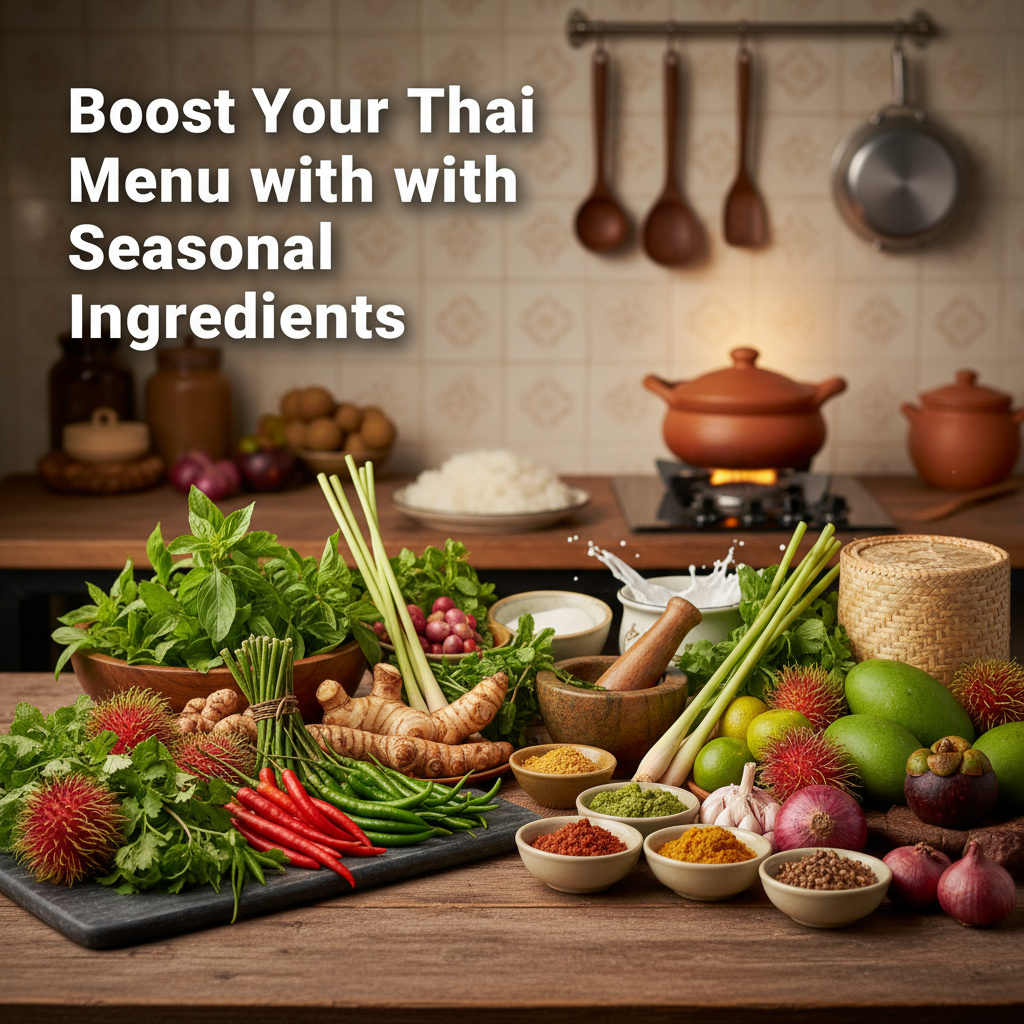
Boost Thai Menus with Seasonal Thai Ingredients and Dishes
Seasonal ingredients are the secret to creating dishes that burst with flavor and authenticity. For Thai restaurants, leveraging local produce not only enhances your menu but also connects diners to the essence of Thai cuisine. Here’s how to make the most of seasonal ingredients.
Why Seasonal Ingredients Matter
Using seasonal ingredients offers several benefits:
- Freshness: Seasonal produce is harvested at its peak, ensuring superior taste and quality.
- Cost-effectiveness: Local ingredients are often more affordable when in season.
- Sustainability: Supporting local farmers reduces your carbon footprint and promotes community.
How to Incorporate Seasonal Ingredients into Your Menu
1. Highlight Local Flavors
Work with local farmers to source unique ingredients. For example, use fresh Thai basil from nearby farms to elevate your dishes.
2. Create Limited-Time Specials
Design seasonal dishes that showcase the best ingredients. A “Summer Mango Salad” or “Winter Pumpkin Curry” can draw in customers looking for fresh experiences.
3. Educate Your Staff
Train your team to understand the benefits of seasonal ingredients. Knowledgeable staff can share stories with customers, enhancing their dining experience.
Examples of Seasonal Thai Dishes
Spring: Thai Green Curry with Fresh Peas
Highlight the sweetness of spring peas in a vibrant green curry. Pair with jasmine rice for a refreshing meal.
Summer: Spicy Mango Salad (Som Tum Mamuang)
Use ripe mangoes to create a tangy, spicy salad that’s perfect for hot days.
Fall: Pumpkin Pad Thai
Incorporate roasted pumpkin into your Pad Thai for a seasonal twist that adds warmth and flavor.
Winter: Coconut Soup with Seasonal Greens
Use hearty winter greens like kale or bok choy in a rich coconut soup to warm up your customers.
Marketing Your Seasonal Menu
1. Use Social Media Creatively
Post mouthwatering photos of your seasonal dishes on Instagram and Facebook. Use hashtags like #ThaiCuisine and #SeasonalEats to reach a wider audience.
2. Offer Cooking Classes
Host classes that teach customers how to use seasonal ingredients in Thai cooking. This builds community and promotes your restaurant.
3. Collaborate with Food Bloggers
Invite local food bloggers to try your seasonal menu. Their reviews can create buzz and attract new customers.
Overcoming Challenges
1. Ingredient Availability
Plan your menu around ingredients that are consistently available in your region. Use substitutions when necessary to maintain quality.
2. Cost Management
Negotiate bulk purchases with farmers to reduce costs while ensuring freshness.
Success Story: A Thai Restaurant’s Seasonal Strategy
“Siam Spice,” a popular Thai restaurant, revamped its menu to focus on seasonal dishes. By offering limited-time specials like “Summer Coconut Curry,” they increased foot traffic by 30% during the off-peak months.
Get Creative with Your Seasonal Menu
Seasonal ingredients are more than just food—they’re a way to tell a story. By embracing local produce, you create dishes that resonate with your customers and elevate your brand.
Ready to Transform Your Menu?
Start by experimenting with one seasonal dish this month. Watch how it delights your customers and inspires repeat visits.
What’s your favorite seasonal Thai dish? Share your ideas below and let’s celebrate the flavors of each season together!




0 Comments